Campaign "Let Life Continue" Encourages Recording Your Will on Organ Donation
Although public surveys show that Latvian residents express a positive attitude towards organ donation after death, this support is not reflected in real data – less than 3% of the country's residents have marked their will in the E-health system. Meanwhile, 100 patients are currently waiting for transplants in the country, as noted by Kārlis Rācenis, a nephrologist at Pauls Stradiņš Clinical University Hospital (PSKUS), in an interview with Skonto Media Group (SMG).
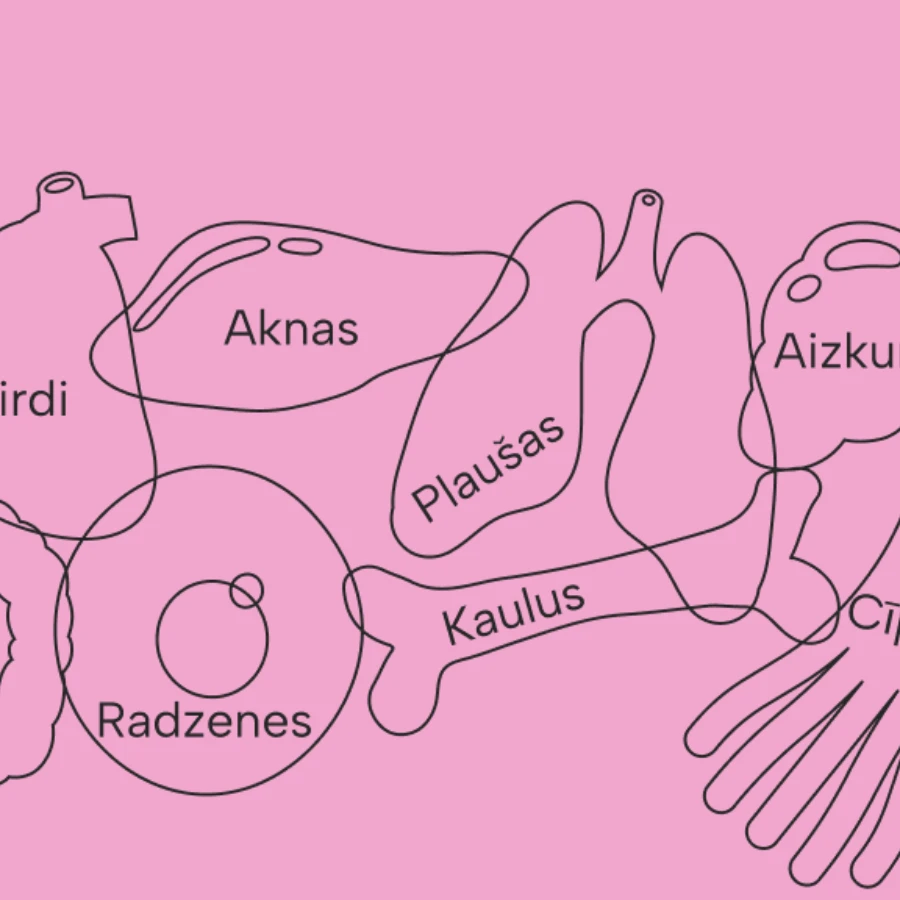
According to data compiled by Stradiņš Hospital, the majority of patients – 60 people – are waiting for a kidney transplant. Heart transplants are needed for 14 patients, corneas for 13, livers for 12, and one person is waiting for a lung transplant.
Nephrologist Kārlis Rācenis explains to SMG that the number of patients on the waiting list is variable, but it will definitely increase in the future. This is influenced by both the activity of doctors in examining patients and the patients' own understanding of treatment options.
"Organ transplantation in Latvia is not an unreality – it is a real process that is possible and available, and we should actually move towards it more and more. Organ replacement therapies, such as kidney replacement therapy, allow a person to live, but returning to the same life rhythm as before is actually only possible after a kidney transplant," emphasizes K. Rācenis.
Evaluating the trends of recent years, the doctor admits that there have been no drastic improvements in public awareness – this year, the number of refusals by relatives was even higher than last year. In other European countries with similar legislation, 20% to 30% of residents have officially registered their choice.
To change the situation, Stradiņš Hospital has launched the campaign "Let Life Continue", inviting residents to make a timely decision, mark it in E-health, and discuss it with relatives.
"No one else around our relatives will know what our wish was if we haven't talked about it," K. Rācenis explains to SMG. If a person has not made a mark in E-health, doctors turn to relatives in a crisis. If it hasn't been discussed in the family beforehand, it is very difficult for relatives to make a decision in an already emotionally heavy moment.
Organ donation is voluntary and without compensation, and the organs of a deceased person cannot be used against their expressed will during their lifetime. You can register and change your decision at any time on the eveseliba.gov.lv portal:
Log in to the portal with Smart-ID, eParaksts mobile, or eID card.
In the "Personal Data" section, select "Organ and Body Usage Permissions".
In the "Organ and Tissue Use for Transplantation" subsection, mark permission or prohibition for all or only certain organs and tissues.
More information about organ donation after death is available at laidziveturpinas.lv.
Photo: Publicity image