Experts Warn About Risks of Parents Excessively Posting Children's Photos on Social Media
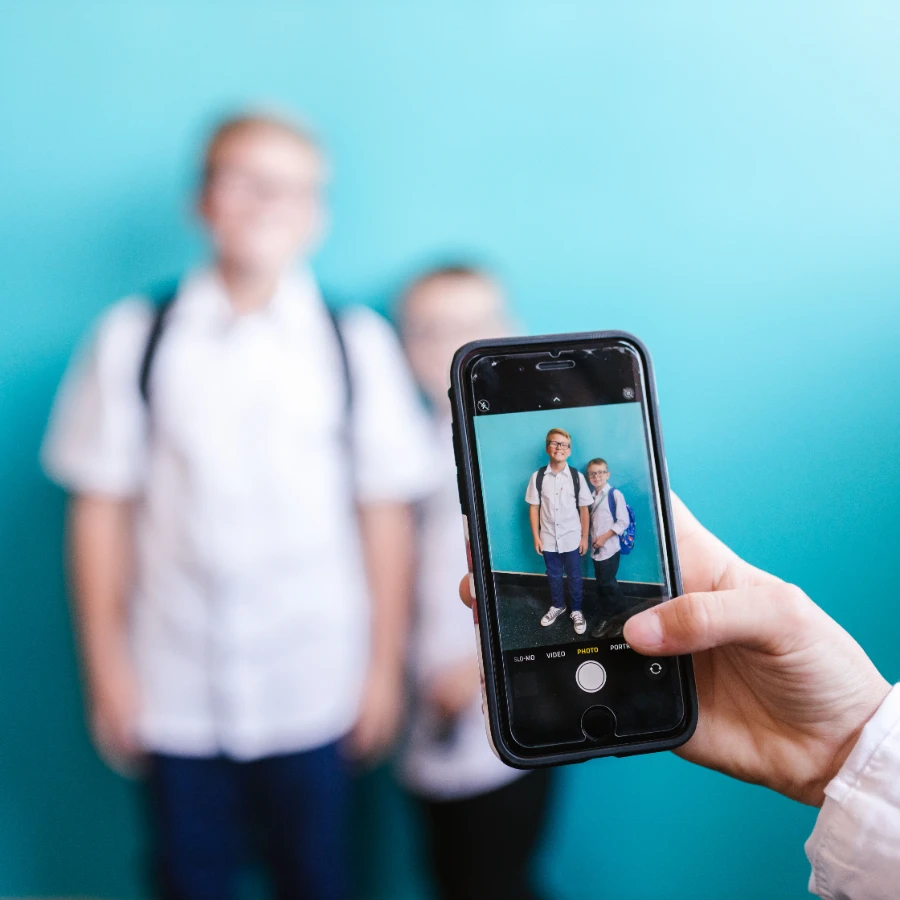
Marking the European Day for the Protection of Children against Sexual Exploitation on November 23, the Latvian Safer Internet Centre (Drossinternets.lv) has launched an informative campaign "A Child is Not Content!" Its aim is to explain to parents the risks associated with excessive posting of children's photos and videos on social media.
While parents' desire to share family life events and children's achievements is understandable and social networks often serve as a digital family album, experts are increasingly drawing attention to so-called sharenting (from English share and parenting) or excessive public sharing of children's data and images. The campaign's initiator is writer and producer Lelde Kovaļova, who has noticed how uncritically parents treat their children's privacy and safety on social media.
"First and foremost, it is important to understand that a child's interests should come first. A child's safety, privacy, and interests should be prioritized over one's own desire for recognition, acknowledgment, or attention," emphasizes Maija Katkovska, head of Drossinternets.lv, in an interview with Skonto Media Group (SMG). She points out that parents do not always realize the public nature of social networks and that seemingly innocent images can fall into the hands of malicious individuals.
"Seemingly innocent children's photos from the beach, pool, bathing, or gymnastics classes, where the child is in tight clothing or underwear, are the main material that pedophiles purposefully seek and collect on social media. These images often end up in closed pedophile forums and the 'dark web,' where children's appearances are discussed and sexual fantasies are shared," warns Katkovska.
In addition to online safety risks, excessive content posting directly affects the child's daily life and understanding of personal boundaries. Often, parents, driven by good intentions or humor, share moments when the child is angry, crying, sulking, or in an awkward situation.
"Parents may find it funny, but often this content posted by parents causes the child distress at school, as peers have seen it and mock the child," explains the head of Drossinternets.lv.
Constant daily documentation—from breakfast to sadder moments in life—creates a false impression in the child that all life is public. "If a child sees that parents are posting their entire life online in large quantities, then when strangers approach the child online and try to extract information or even nude photos, the child lacks this critical boundary. They don't feel when to stop because they think it's normal," notes Katkovska.
Speaking about the practice of educational institutions and interest groups asking for parents' written consent to photograph children, Katkovska acknowledges that coordination is a positive requirement of the General Data Protection Regulation, but parents should not feel pressured to sign it out of fear that the child will be left out of events.
The expert emphasizes that educators should also carefully evaluate the images to be published, ensuring they do not contain awkward poses or facial expressions that could lead to ridicule, and upon a justified parental request, a specific image should be removed from the institution's social networks.
However, the head of Drossinternets.lv concludes that school event photos are not comparable to the harm caused by parents' daily posting of intimate and overly private content about their offspring.
During the "A Child is Not Content!" campaign, industry experts will continue to explain which photos are better not to publish and will also remind about the severe legal consequences that threaten for posting children's nude photos online.